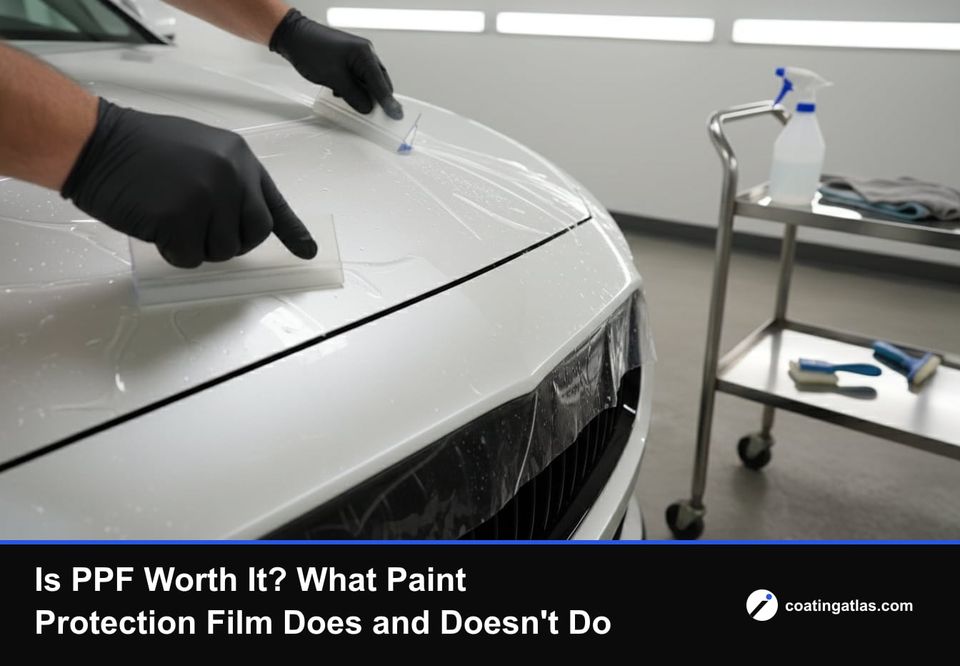
PPF is worth it if you want a physical layer over the paint to take rock chips and light scratches, and you plan to keep the car long enough to benefit. XPEL calls its film worth the cost, but that is a maker's view, not a test result. The film covers only what the installer covers, and its warranty covers the film, not the paint underneath.
Is PPF worth it?
PPF is worth it when the damage it targets is a real risk for you and you will keep the car long enough to use what you paid for. The companies that sell it say yes. XPEL says paint protection film "is worth the cost" because it protects against scratches and chips, which can help protect resale value.
That is a company describing its own product. We haven't tested any film, and nobody can promise what your car will face. Ask three things instead: what do you want protected, from what, and for how long?
What does PPF protect against?
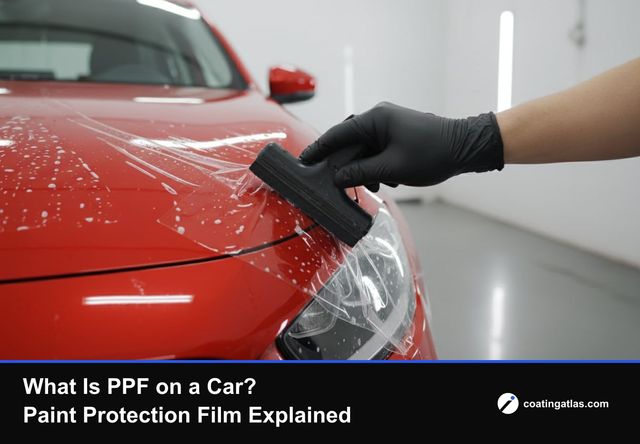
PPF is a clear polyurethane layer on top of the paint. It takes physical wear. Makers list the same few things.
- Rock chips and debris. Avery Dennison says its film protects painted surfaces from stone chips, bug splatter and scratches.
- Light scratches and swirls. XPEL says its film can self-heal minor scratches and swirls. SunTek says its film repairs the majority of scratches using the heat of the sun, and LLumar says surface scratches self-heal when exposed to a heat source such as the sun.
- Sun and chemicals. Avery Dennison says PPF is resistant to UV radiation and chemicals.
- Road debris. XPEL says gravel, sand, salt and debris kicked up by traffic can chip and scratch hoods and fenders, and that PPF can defend against them.
Whether all PPF self-heals differs by film. If chips are your main worry, how PPF handles rock chips goes deeper. New to the product? Start with what PPF is.
What does PPF not do?
PPF has limits, and some of them change whether it is worth it for you.
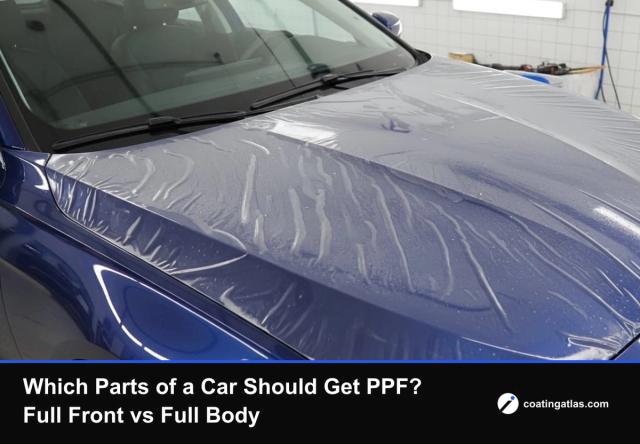
- It doesn't cover everything. The film covers only the panels the installer fits. XPEL says the edge of a partial front end may be slightly noticeable, depending on color and finish. Which parts to cover shapes the result and the bill.
- Deeper damage can get through. XPEL says deeper scratches that penetrate the film may not fully heal.
- The warranty is for the film. XPEL's warranty page says it "does not cover damage to the paint itself." More on that below.
- It needs care. LLumar says pressure washing and automatic washes can cause lifting. Care steps are listed below.
- Quality varies. Ceramic Pro says "not all paint protection films are equal," so the brand and film name matter.
What worries owners most?
- "Will it turn yellow?" Makers warrant against it for a set term. XPEL's warranty covers yellowing, cracking, blistering and delaminating on most lines. Avery Dennison says high-quality PPF should not yellow or degrade over time. These are maker claims. How long PPF lasts lists the terms.
- "Will it hurt my paint when it comes off?" XPEL says removal will not harm paint when done correctly. Avery Dennison says its film can come off without damaging the paint underneath. Whether removal damages paint covers the cases where it can.
- "Can I wash it normally?" Yes, with limits. LLumar calls hand washing the preferred method. Wait times and other rules are under owning PPF below.
- "Will it stop rust or bird dropping damage?" Film is sold against chips, scratches and stains. XPEL tells owners to remove bug and bird residue quickly and not let it dry on the surface, so film doesn't replace cleaning. Don't assume it prevents rust.
- "What if the shop does a poor job?" XPEL's warranty excludes improper installation. That is why the shop matters as much as the film.
What does the warranty actually cover?
The warranty is for the film, not for what hits it. That changes the "worth it" math, so read it before you pay.
XPEL's warranty page lists exclusions, including damage from improper wash techniques and automatic car washes. It also names "damage from outside forces, such as rocks or road debris," plus collision, vandalism, fire, hail and flood. Stains, scratches, scuffs and chips to paint are left out too.
So the film takes the chip, and you are not paid back for it. What the warranty does cover is the film failing: yellowing, cracking, blistering and delaminating on most XPEL lines. XPEL ULTIMATE PLUS, for example, carries 10 years. Terms differ by line, and the conditions differ too. How long PPF lasts has the full table.
If you are wondering whether film puts your car's own warranty at risk, the FTC says it is generally illegal for a warrantor to tie warranty coverage to the use of specified parts or services, unless the warrantor provides them free or gets an FTC waiver. That is general information, not legal advice. Whether PPF voids a car warranty goes further.
What does owning PPF involve?
Film is low fuss, not no fuss. Makers give these care steps.
- Wait to wash. Avery Dennison says to wait 48 hours after install. LLumar says 72 hours.
- Skip the tunnel wash. XPEL says not to use automatic tunnel car washes, because they can scratch and damage the finish.
- Watch the pressure washer. XPEL says to stay 3 feet away from the paint. Avery Dennison says to avoid high-pressure water near the edges, where it can lift the film.
- Clean contaminants fast. XPEL says not to let bugs, bird residue or hard water spots sit and dry.
- Seal it. Avery Dennison says to seal its film at least once every 3 months to keep a high gloss. XPEL says at least every 6 months for ULTIMATE PLUS. STEK says not to wax its film.
These steps are real time and some cost. If you hate washing by hand, count that in.
How thick is the film, and does it matter?
Thickness is one way to compare. XPEL says ULTIMATE PLUS is 8 mil thick, and STEK says DYNOshield is 8 mils thick. A mil is one thousandth of an inch, so 8 mils is 0.008 inch. Don't pick a film on a single number. Ask the shop what film it uses, and read that maker's page.
Is PPF worth it on a leased or new car?
Ceramic Pro says PPF is best suited for people who lease and for owners who plan to keep a car a long time. That is one maker's view, and its case for a new car is under "Who gets the most from PPF?" below.
Two cautions apply to leases. Film can't be reused once it is removed, says Ceramic Pro, so you pay for it again if you swap cars. And your lease may have rules about what you can add, so check first.
What if you pass on PPF?
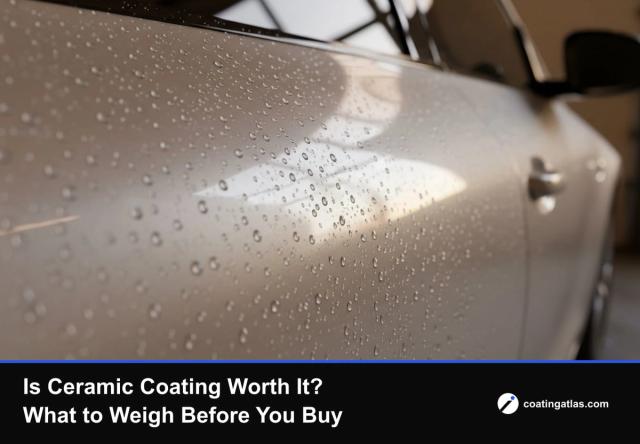
You can protect paint other ways, with different trade-offs. A ceramic coating adds a thin hard layer and is easier to clean. Regular washing and prompt cleaning of bird droppings and bugs matter either way. If you lean toward a coating, you can find a ceramic coating installer too.
Who gets the most from PPF?
Based on what makers say, film pays off most for these owners:
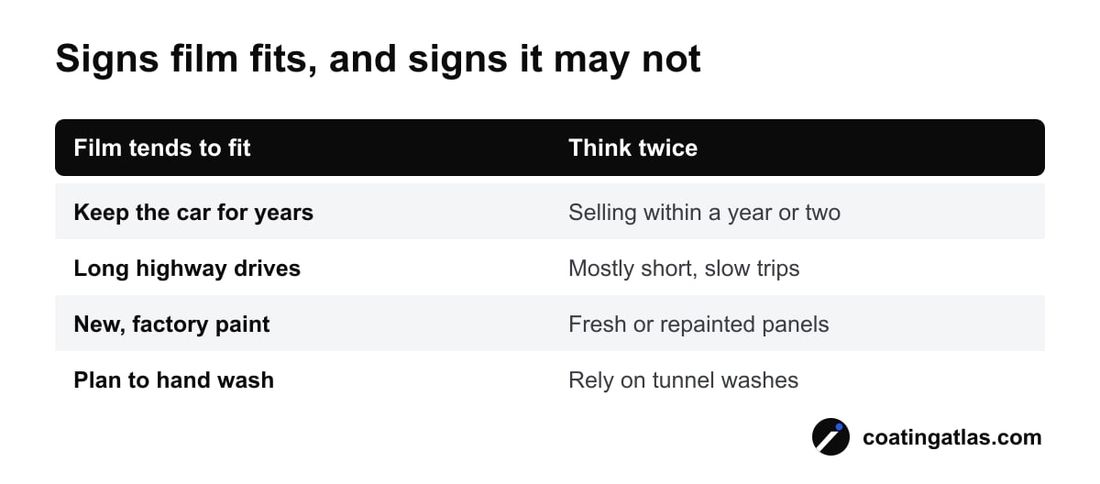
- People who keep the car for years. Some films carry a warranty of 10 years or more. A warranty is a contract, not a promise of how the film will look.
- Drivers with long highway miles. More miles means more road debris, and makers name the bumper, hood and fenders as high-impact areas.
- Owners of a new car. Ceramic Pro says a new car is "the best time to apply PPF," since the paint needs less prep. Its article also links front-end film to trade-in value. That is the maker's claim, not a guarantee.
It may be a harder sell if you will sell the car soon, if the paint is already chipped or repainted, or if light swirl marks are your only concern. Avery Dennison says its film is intended for fully cured factory paint, so tell the shop about any repaint.
Here are two examples.
Say you buy a new SUV and plan to keep it for ten years. You commute on the highway every day. Film on the front end could pay off over that time, and you would want to read the warranty terms closely.
Say you lease a car for three years and mostly drive short trips in town. The risk of rock chips is lower, so a small package on the mirrors and door edges may fit better than a full front.
How does PPF compare with ceramic coating on rock chips?
SunTek says ceramic coatings do not offer the same rock chip and surface protection as its film. Ceramic Pro says coatings are not as good as PPF at protecting from rock chips and larger road debris. PPF vs ceramic coating sets them side by side. Whether a ceramic coating is worth it covers the other half.
What should you ask before you decide?
These questions settle most of the "worth it" question. Questions to ask a PPF installer has the longer version.
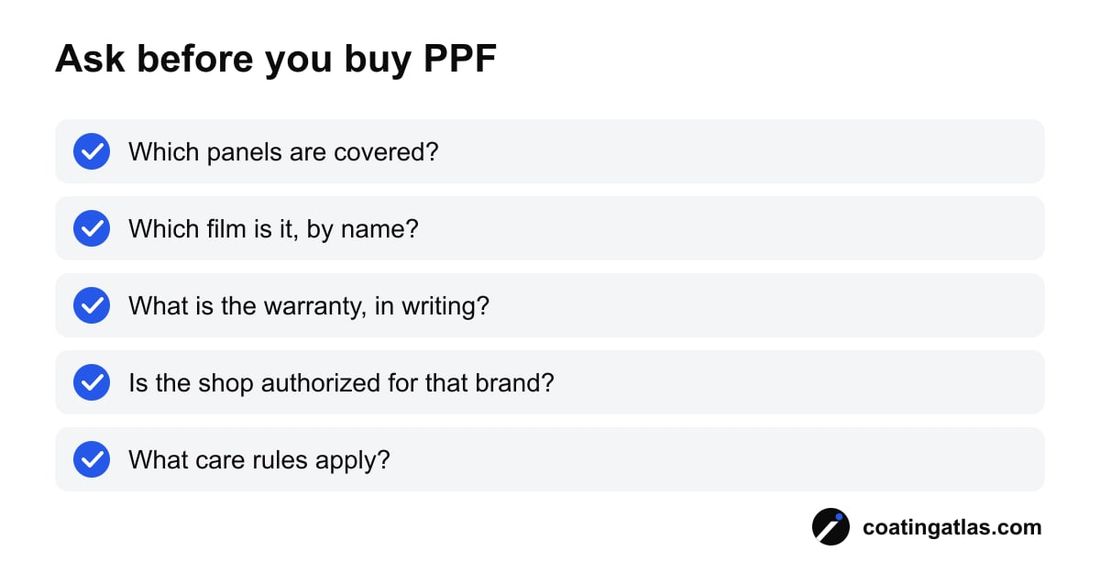
XPEL requires proof of installation from an authorized installer to process a warranty claim, so the fourth question matters.
What does PPF cost?
Costs change with the film, the panels and the shop. These are prices shops publish, not quotes.
| Package | Typical price | Shops |
|---|---|---|
| Partial front | $900–$1,300 | 610 |
| Full front | $1,800–$2,200 | 753 |
| Track pack | $2,400–$3,000 | 322 |
| Full body | $5,000–$6,500 | 630 |
For more, see PPF cost. When you are ready, find a PPF installer near you and compare quotes for the same film and coverage.
Questions
Is PPF necessary on a new car?
Not necessarily. Ceramic Pro argues a new car is the best time to apply it, because it needs less paint correction and prep. Whether it is worth it still depends on how long you keep the car and where you drive.
Is a ceramic coating enough instead of PPF?
Makers of film and coatings both say a coating is not the same as film for chips. SunTek says ceramic coatings do not offer the same level of rock chip and surface protection as its film. Ceramic Pro says coatings are not as good as PPF at protecting from rock chips and larger road debris.
Is PPF worth it on a daily driver?
A daily driver sees more miles and debris, which is the wear makers say film is for. It also gets washed more often, and LLumar says pressure washing and automatic washes can cause lifting. Weigh both.
Does PPF protect against road salt and chemicals?
Avery Dennison says PPF is resistant to UV radiation and chemicals. XPEL lists salt among the debris that can chip and scratch hoods and fenders. Neither is a promise for your car.
Sources
- XPEL FAQs
- XPEL warranty information
- XPEL: top 5 areas on a car to protect
- SunTek PPF FAQ
- LLumar PPF FAQ
- Avery Dennison PPF FAQ
- Avery Dennison: the science behind paint protection films
- Avery Dennison application bulletin IB4.30
- XPEL product care
- STEK USA: DYNOshield
- FTC: staff warns companies that it is illegal to condition warranty coverage on specified parts or services
- Ceramic Pro: pros and cons of PPF on new cars
Checked 5 Nov 2026. Manufacturers change their terms, so confirm with the current document.
A US directory of PPF and ceramic coating installers. Our guides draw on manufacturers' published information and the prices shops publish on their own websites. Brands and shops don't pay for coverage. Read our editorial policy.